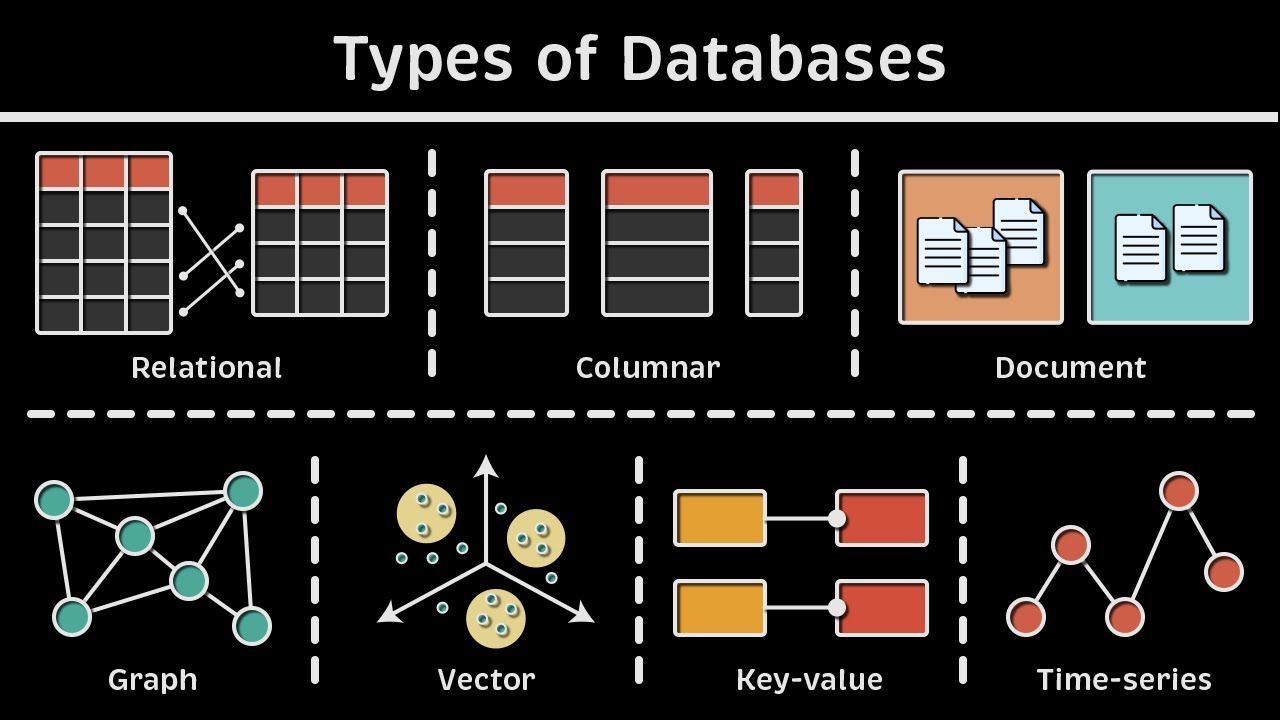
In the ever-evolving landscape of data management, NoSQL databases have emerged as powerful alternatives to traditional relational databases. While document and key-value stores have been widely adopted, there exists a fascinating world of next-generation NoSQL databases that cater to specific use cases and offer advanced features. In this article, we’ll dive deep into these cutting-edge database models: graph databases, columnar databases, and time-series databases.
Graph Databases: Unleashing Relationships
Graph databases are designed to handle complex relationships between data points. They represent information as nodes (entities) connected by edges (relationships). Here are some key concepts:
- Nodes: Represent entities (e.g., users, products, organizations).
- Edges: Capture relationships between nodes (e.g., follows, likes, purchases).
- Properties: Store additional information about nodes and edges.
Use cases:
- Social Networks: Analyzing connections, identifying influencers, and recommending friends.
- Recommendation Engines: Personalizing content recommendations based on user behavior.
- Knowledge Graphs: Building semantic networks for structured information.
MATCH (user:User)-[:FOLLOWS]->(friend:User)
WHERE user.name = 'John'
RETURN friend.name
Graph databases excel in scenarios where relationships matter most. Whether it’s modeling social interactions, understanding dependencies in supply chains, or detecting fraud patterns, graph databases provide unparalleled flexibility.
Columnar Databases: Optimizing Analytics
Columnar databases store data in columns rather than rows. This design enhances query performance for analytical workloads. Key features include:
- Column-Oriented Storage: Efficient data retrieval by accessing only relevant columns.
- Compression Techniques: Reduced storage requirements.
- Aggregation-Friendly: Ideal for analytics and reporting.
Use cases:
- Data Warehousing: Storing and analyzing historical data.
- Financial Analytics: Calculating portfolio performance, risk metrics, and trends.
- Log Analysis: Efficiently querying large log files.
SELECT SUM(sales_amount) FROM sales WHERE date BETWEEN '2024-01-01' AND '2024-03-31';
Columnar databases shine when dealing with massive datasets and complex queries. Their ability to compress data efficiently and optimize for read-heavy workloads makes them indispensable in modern data architectures.
Time-Series Databases: Mastering Temporal Data
Time-series databases specialize in handling time-stamped data points. Key characteristics include:
- Time-Ordered Data: Organized chronologically.
- Retention Policies: Automatic data expiration.
- Aggregation Windows: Support sliding time windows for analytics.
Use cases:
- IoT Applications: Collecting and analyzing sensor data.
- Monitoring and Alerting: Tracking system metrics and triggering alerts.
- Financial Time Series: Storing stock prices, exchange rates, and economic indicators.
SELECT MEAN(temperature) FROM sensors WHERE time > now() - 1h GROUP BY location;
Time-series databases are essential for real-time monitoring, predictive analytics, and historical trend analysis. Whether you’re tracking sensor readings, server performance, or market fluctuations, these databases ensure efficient data storage and retrieval.
As seasoned data engineers, we must explore beyond the familiar and embrace the diversity of NoSQL databases. Whether modeling intricate relationships, optimizing analytics, or managing temporal data, our choices impact project success. Stay curious, experiment, and adapt – just as these databases do.
Remember, the journey doesn’t end here. Explore, benchmark, and adapt to the changing landscape – just as these databases do.
Blog Statistics